

The standard approach to insurance procurement in the franchise space is fundamentally flawed. When a franchisor or a multi-unit operator looks at two competing insurance proposals and sees a 40% price difference, the immediate reaction is usually a mix of relief and suspicion. We have been conditioned to treat insurance as a commodity, like bulk flour or office supplies, where the lowest price wins. But insurance is not a product. It is a legal contract that dictates who pays when a catastrophic event occurs. If you are comparing two quotes based solely on the final premium number, you are likely looking at a failure of systemic data, not a “good deal.”
The reality of risk management is that the premium is a derivative. It is the end result of a complex calculation involving payroll estimates, NCCI class codes, and geographic risk modeling. When one quote is significantly cheaper than another for the same brand, it is rarely because one broker has a “special relationship” with a carrier. It is usually because someone has manipulated the underlying data or stripped out essential protections. Shortcutting the paperwork to meet a Brand Standard in the FDD might check a box for compliance, but it does nothing to protect the corporate balance sheet when a claim actually hits.
Operational drift is the silent catalyst for these discrepancies. A franchise system rarely stays static. A carpet cleaning business starts offering mold remediation. A lawn care brand adds snow removal. A pool service starts installing heaters. These are not just “service expansions”; they are unrated exposures. If your insurance quote is based on your original FDD description but your franchisees have drifted into higher-hazard work, that “cheap” quote is effectively a piece of fiction. It creates a gap between what the carrier thinks they are insuring and what is actually happening on the ground. This misalignment leads to denied claims, massive audit back-payments, and a total loss of credibility with the insurance market.
- Premium Audits Are Not Optional Suggestions. A low quote built on underestimated payroll is simply an interest-free loan from the carrier that will be called in at the end of the year, often resulting in a cash flow crisis for the operator.
- True Risk Transfer Requires Policy Alignment. Having a certificate that says “$1,000,000 in coverage” is meaningless if the policy contains an “Action Over” exclusion that leaves the franchisee uninsured for their primary contractual liabilities.
- Class Code Integrity Is the Only Path to Predictable Costs. Misclassifying employees to save money on the front end is a form of rate evasion that inevitably leads to retroactive premium spikes and legal exposure.
- Geographic Risk Is Non-Negotiable. You cannot benchmark a unit in Salt Lake City against a unit in Miami; the cost of capital for reinsurers is tied to the physical location of the asset, not the brand on the sign.
Why does a peer in a different state have lower costs for the same brand?
Geographic location is perhaps the most aggressive driver of premium variance, yet it is the variable most frequently ignored during peer-to-peer benchmarking. In the franchise world, operators often compare their P&Ls at national conferences, leading to frustration when one sees a vastly higher insurance line item than another. The math of insurance, however, is dictated by local loss costs and catastrophic (CAT) modeling. A quick-service restaurant in a coastal county in Florida is rated against the Probable Maximum Loss of a hurricane. An identical building in Utah is rated for fire and moderate seismic activity. These are not comparable risks.
State-specific legal and regulatory environments also create massive cost disparities. The National Council on Compensation Insurance (NCCI) calculates “loss costs” based on a state’s medical fee schedules and the local litigation climate. If a state legislature in California increases disability benefits, the cost of Workers’ Compensation for every franchisee in that state will rise regardless of their individual safety record. When you compare your bottom line to a franchisee in a different state, you aren’t comparing business efficiency. You are comparing the risk appetite of global reinsurers for specific sets of GPS coordinates and the legislative whims of state governments.
How can quotes vary so much if the brand requirements are identical?
Franchisors often believe that because their Minimum Insurance Requirements are clearly defined in the FDD, every quote meeting those limits is providing the same protection. This is a dangerous assumption. A Certificate of Insurance (COI) is merely a snapshot of limits; it reveals nothing about the internal logic of the policy form. A quote can be 30% cheaper because it includes a “Hammer Clause” in a liability policy or a “Prior Work Exclusion” that removes coverage for any project started before the policy’s effective date.
The “Paperwork Shortcut” is the most common hiding place for these deficiencies. An agent might deliver a quote that satisfies the $1,000,000 General Liability requirement but includes an “Action Over” exclusion. In high-litigation states, this exclusion is catastrophic. It means if a contractor’s employee is injured and sues the franchisee, the policy will not respond. The franchisor sees a COI that looks compliant, but the franchisee is actually standing naked against their greatest contractual risk. True risk transfer is about the alignment of policy language with the indemnity clauses of the franchise agreement, not just matching the numbers on a summary sheet.
Why did one agent use different payroll and revenue numbers than the other?
Commercial insurance premiums are “auditable” instruments. The price paid at the beginning of the term is a deposit based on an estimate of Remuneration (Payroll) or Gross Sales. This creates a massive opportunity for “operator traps.” If Agent A quotes based on $1,000,000 of payroll and Agent B quotes based on $700,000, Agent B will always appear cheaper on the proposal. However, the base rate per $100 of payroll remains the same.
This is not a saving; it is a reporting error. At the end of the year, the carrier will perform a Premium Audit, reviewing the actual 941 filings. If the payroll was truly $1,000,000, the franchisee will receive a non-negotiable bill for the difference, often due within 30 days. This creates a sudden cash flow crunch that can cripple a growing unit. When evaluating quotes, you must audit the “Exposure Base.” If the payroll and revenue numbers on the quote do not match the P&L, the quote is not a deal—it is an accounting liability waiting to happen.
Can multiple agents shop the same carrier to find me a better price?
In the commercial market, the idea of “shopping” the same insurance company through multiple brokers is a myth. Carriers utilize a system known as Market Blocking. The first agent to submit a completed application to a carrier like Travelers, Liberty Mutual, or The Hartford “owns” that submission for the year. If a second agent attempts to quote the same business with that carrier, the underwriter will reject the submission as a duplicate.
This systemic friction means you cannot get different prices from the same company just by switching brokers. The carrier will not allow a second agent to modify the data or change the rates without a formal Broker of Record (BOR) letter, which effectively fires the first agent. Instead of trying to get the same company to give you two different prices, the focus should be on which broker has the deepest expertise in your specific franchise model and access to the carriers that actually want to write that class of business.
Is the protection actually the same, or is it just the price?
Many “low-cost” insurance comparisons fail because the quotes are not for the same scope of coverage. It is common to see an operator claim one quote is better when it only covers General Liability and Auto, while the competing quote includes Workers’ Comp, Employment Practices Liability (EPLI), and Cyber. Even within a single policy, the differences in the “shield” can be vast.
Consider Employment Practices Liability. A budget policy may lack Third-Party Coverage, which protects the business if a customer or vendor sues for harassment. More importantly, a robust policy should include defense costs for ADA non-compliance claims. While the insurance won’t pay to remodel a bathroom to meet ADA standards, it will pay the legal fees to defend a “drive-by” lawsuit. Similarly, in Cyber Insurance, a cheap quote often excludes Social Engineering. If an employee is tricked into wiring money to a fraudulent account, a standard policy without a specific endorsement will leave the business to absorb the loss. You aren’t comparing “apples to apples” if one agent has built a comprehensive shield and the other has handed you a sieve.
Why is the NCCI Class Code more important than the premium?
The NCCI Class Code is the fundamental DNA of an insurance premium. Every job function is assigned a four-digit code based on the historical frequency and severity of injuries in that specific role. If an agent misclassifies “Delivery Drivers” as “Clerical Staff” to lower a quote, they are engaging in what is essentially rate evasion.
During a mandatory Workers’ Comp audit, the auditor will examine actual job descriptions and payroll records. If they discover that employees were misclassified into a lower-rated code, they will retroactively re-rate the entire payroll at the correct, higher rate. According to the National Association of Insurance Commissioners (NAIC), premium audits result in an average upward adjustment of 10% to 15% for businesses that do not actively manage their class codes. A “cheap” quote today is statistically likely to become an “expensive” audit tomorrow because the NCCI is mandated to maintain the integrity of the data pool.
System Readiness: The Executive Insurance Audit Checklist
- Verify the Exposure Base: Do the payroll and revenue numbers on the quote match the last four quarters of your actual P&L?
- Validate the Class Codes: Are your field technicians, drivers, and office staff assigned to the correct NCCI codes, or are they all lumped into a “general” category?
- Check for Exclusionary Endorsements: Does the policy include “Action Over,” “Residential,” or “Multi-Family” exclusions that would nullify coverage for your actual work?
- Review the Schedule of Policies: Does the quote include the “Silent Killers” of the balance sheet: Cyber (with Social Engineering), EPLI (with Third-Party/ADA), and Hired/Non-Owned Auto?
- Confirm Geographic Rating: Is the property coverage rated for the specific zip code, or is it using a generic regional average?
FAQ
If I have the same carrier as another franchisee, shouldn’t my rate be the same? No. Rates are built on layers. The carrier starts with a state-filed base rate, but then adds their specific tiering, your individual Experience Modification Rate (EMR) based on your loss history, and “Scheduled Credits” that an underwriter applies based on your specific safety manuals and risk presentation.
How can I tell if a quote is missing something? Compare the “Schedule of Policies” side-by-side. If one agent provides a single quote for Liability and another provides a package including Workers’ Comp, Cyber, and EPLI, the cheaper quote is simply leaving the business exposed to more risk.
Why does the agent need my P&L and safety manual just for a quote? A high-quality operator uses the P&L to ensure the payroll estimates are accurate, which prevents year-end audit surprises. The safety manual is used as a negotiating tool to prove to the underwriter that you deserve “Scheduled Credits,” lowering your price through better risk management rather than cutting corners.
What is the “Experience Modification Rate” (EMR) and why does it matter? The EMR is a multiplier based on your three-year claims history compared to the industry average of 1.0. If you have a 1.2 EMR and your peer has a 0.8, you will pay 50% more for the exact same insurance because you are statistically “riskier” to the carrier’s pool.
Can I have a second agent call the carrier I already have? No. Because of Market Blocking, a carrier will only discuss a specific client with one agent at a time. To change agents while staying with the same carrier, you must issue a Broker of Record (BOR) letter to the carrier.
Conclusion
Comparing insurance quotes in a franchise system requires shifting the focus from the bottom-line number to the underlying systemic data. A “lower rate” is often just an artifact of lower exposure estimates, aggressive class code selection, or the removal of critical coverage endorsements like ADA defense or Social Engineering. As an operator, your goal isn’t to find the cheapest paper; it’s to ensure that when a $500,000 slip-and-fall or a $100,000 employment claim occurs, the risk actually transfers to the carrier’s balance sheet instead of staying on yours. If you cannot explain why one quote is cheaper than another by looking at the payroll, class codes, and exclusions, you aren’t making an informed financial decision: you are taking an unhedged bet on your business’s future.
About the Author
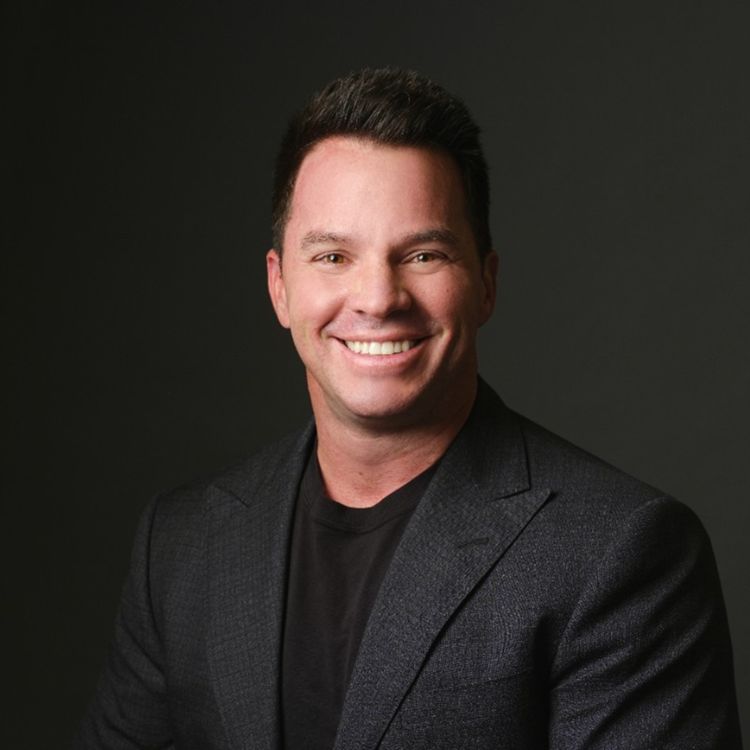
Wade Millward is the founder and CEO of Rikor, a technology-enabled insurance and risk management company focused on the franchising industry. He has spent his career working with franchisors, franchisees, and private-equity-backed platforms to uncover hidden risk, design scalable compliance systems, and align insurance strategy with how franchise systems actually operate. Wade writes from direct experience building systems, navigating claims, and helping brands scale without losing visibility into risk.