

The uncomfortable truth in child education franchising is that most systems are currently solving the wrong problem. If you have recently increased your Sexual Abuse and Molestation (SAM) insurance mandates simply to make your Franchise Disclosure Document (FDD) look more “defensible” to prospective buyers or lenders, you have not actually transferred risk. You have merely shifted a number on a declarations page while leaving the core exposure of your brand entirely intact.
The stakes here are not measured in premium dollars, but in the survival of your corporate balance sheet. In the current legal climate, “paperwork shortcuts”—where a franchisor mandates a high limit but fails to verify the underlying policy structure—create a false sense of security that evaporates the moment a claim is filed. When a system relies on insurance as a proxy for safety, it ignores the reality that catastrophic verdicts are not driven by policy limits; they are driven by systemic institutional failure.
The Reality of Operational Drift
Operational Drift is the silent killer of franchise risk management. It occurs when a unit’s daily activities evolve faster than its insurance profile. Consider these common scenarios:
- The Tutoring Center: A math-focused enrichment brand adds an “after-school” component. Suddenly, they have moved from instructional exposure to custodial care exposure, often without notifying the carrier.
- The STEM Program: An enrichment franchise launches a summer camp with off-site field trips. They have now introduced transportation and “away-from-premises” risks that were never contemplated in the original underwriting.
- The Sports Franchise: A program adds private 1-on-1 coaching sessions. This creates a “one adult, one child” scenario that violates the foundational “two-adult rule,” creating a massive supervisory gap.
In each case, the franchisee is likely still paying for the $1M or $2M policy they bought at opening, but that policy is now covering a materially different business. This transition from a “safe” model to a “high-risk” model happens incrementally, and without automated triggers for coverage review, the franchisor remains blissfully unaware until a “nuclear” claim arrives.
Key Takeaways
- Policy Limits Cannot Cure Institutional Concealment. The $135 million and $500 million verdicts making headlines are never the result of a $1 million policy being “too small.” They are the result of documented supervisory failures, hidden allegations, and a lack of reporting culture.
- Insurance Addresses Frequency While Protocol Addresses Severity. Use insurance to handle the “realistic” range of claims (the $750,000 to $2.5 million band). Use operational protocol—strictly enforced—to prevent the catastrophic “nuclear tail” that no commercial policy can fully cover.
- Flat Mandates Frequently Backfire by Creating Non-Compliance. When a mandate requires a $5 million limit that costs a small operator 40% of their net profit, that operator will inevitably seek “workarounds,” such as ghost policies or altered certificates, leaving the system effectively uninsured.
- Your Umbrella Policy Likely Provides Zero SAM Coverage. Due to standard ISO exclusions (CG 21 46 and similar), most commercial umbrellas do not “stack” on top of SAM limits. The primary SAM limit is almost always the absolute ceiling of protection for that unit.
How Does a SAM Claim Impact the Entire Franchise System?
The health of a franchise brand is inextricably linked to the unit-level economics and the integrity of its risk transfer. In child-facing brands, a single unmanaged SAM claim at one location can contaminate the entire network’s ability to secure affordable coverage. Insurance carriers do not view a franchise system as 100 independent businesses; they view it as a single risk pool with a shared DNA of operational standards.
When a claim hits, the first thing a plaintiff’s attorney examines is not the franchisee’s bank account, but the franchisor’s level of “control.” If the system has mandated high insurance limits but ignored the “Operational Drift” mentioned earlier, the brand becomes the primary target. This creates a “Brand Health” crisis: if one unit is found to have bypassed background checks or violated supervision rules, every other unit in the system is suddenly viewed through a lens of systemic negligence.
Furthermore, the economic impact is immediate. As the SAM market contracts—with nearly 40% of carriers planning to exit the space—a single major loss can lead to “non-renewals” across the entire system. Protecting the brand means ensuring that the smallest unit is as operationally sound as the largest, because the legal system treats their failures as one and the same.
Why Do Franchisees Resist These Mandates?
Corporate teams often face significant friction when rolling out new SAM requirements. Understanding the root of this resistance is the only way to overcome it. Usually, the pushback stems from three specific areas:
- Economic Irrationality: For a tutoring center netting $50,000 a year, a $15,000 insurance premium isn’t a “cost of doing business”—it’s a threat to their livelihood. When compliance consumes a massive percentage of margin, the franchisee views the franchisor as an adversary rather than a partner.
- Market Unavailability: Franchisees often report that they “can’t find” the coverage mandated. This is frequently true. Only about 12% of the market will write SAM limits above $10 million. If you mandate what the market won’t supply, you are mandating failure.
- Complexity of Terms: Most operators do not understand the difference between “defense inside limits” and “defense outside limits.” They see a $1M limit on a page and assume they are protected for $1M. When they realize legal fees might eat half that limit before a settlement is even discussed, they feel misled by the corporate mandate.
Addressing these concerns requires moving away from “flat” mandates toward a tiered system that scales with the operator’s revenue and actual risk profile.
How Do You Roll Out a Scalable SAM Program?
Implementing a modern risk framework across a multi-unit network requires a move from “paperwork enforcement” to “systemic verification.” A successful playbook follows these steps:
Step 1: Tier Your Limits
Stop requiring the same $5M limit for a one-room enrichment center and a multi-site childcare facility. Use a revenue-based or enrollment-based scaling model.
- Tier 1 (<$1M Revenue): $1M Per Occurrence SAM limit.
- Tier 2 ($1M–$2M Revenue): $2M Per Occurrence SAM limit.
- Tier 3 (>$2M Revenue): $3M–$5M Per Occurrence SAM limit.
Step 2: Audit the Declarations Page, Not the Certificate
A Certificate of Insurance (COI) is a summary that can hide a multitude of sins. To ensure true risk transfer, you must verify the Declarations Page. You are looking for three things:
- Is SAM a dedicated coverage part, or just a tiny “sub-limit” buried in the General Liability (GL) policy?
- Are defense costs “Outside the Limits”? (This ensures the full limit is available for the victim).
- Is there a “Per Occurrence” limit specifically for SAM?
Step 3: Centralize the Data
Use a designated broker or a risk management platform to aggregate system-wide data. This allows you to spot trends, such as which carriers are providing the best terms and where the compliance gaps are opening.
What Are the Strategic Advantages of This Approach?
The upside for the franchisor is clear: a cleaner balance sheet and a more attractive asset for future acquisition or private equity investment. During due diligence, a “compliant” system isn’t one where everyone has a COI; it’s one where the risk management framework is integrated into the operations.
For the individual owner, the bottom-line benefit is sustainability. By tiering limits, you keep their insurance costs at roughly 1–2% of gross revenue. This makes the business more profitable and, ironically, makes them more likely to be fully insured. When insurance is affordable, operators don’t look for shortcuts. They buy the right coverage, which in turn protects the franchisor from the “uncapped contingent liability” of an uninsured unit.
Is Your System Ready for a Nuclear Verdict?
To determine if your current risk posture is sufficient, run through this decision-making framework. If you answer “no” to more than two of these, your system is currently “paper-compliant” but operationally exposed.
| Readiness Factor | Diagnostic Question |
|---|---|
| Protocol Verification |
Do you have a date-stamped log proving every employee completed abuse prevention training this year? |
| Policy Structure |
Can you confirm that 100% of your units have SAM coverage that is not excluded by their umbrella? |
| Operational Alignment |
If a unit adds a new “after-school” service, does it trigger an automatic insurance review? |
| Remuneration Accuracy |
Do your franchisees report their actual payroll (remuneration) to their carriers, or is it an outdated estimate? |
| The “Two-Adult” Rule |
Is your supervision policy in the Operations Manual and audited during field visits? |
Data, Evidence, and Logic: Why Protocol Wins
The NCCI and various insurance carrier reports (such as Praesidium’s 2024 Benchmarking Report) provide a clear causal link between operational behavior and financial outcomes. The market is not pricing for policy limits; it is pricing for behavior.
Organizations with third-party abuse prevention accreditation are 93% more likely to receive SAM coverage and see an average 53% reduction in premiums. This is because the actuarial data shows that the “frequency” of claims is reduced by specific, documented actions:
- Negligent Hiring ($40.8M Average Payout): Avoided by fingerprint-based LiveScan background checks. Name-only checks are insufficient as they miss aliases and out-of-state records.
- Negligent Supervision ($54M Average Payout): Avoided by the “Two-Adult Rule.” No adult should ever be alone with a child in an unobserved space.
- Negligent Training ($23.2M Average Payout): Avoided by annual, mandated training on grooming recognition and reporting chains.
When these protocols fail, the resulting verdicts are “nuclear” because they represent a breach of the public trust. No amount of insurance can cover the $535 million Illinois Pavilion verdict; only the absence of the behavior that caused it could have saved that organization.
FAQ
Does requiring specific insurance limits in the Franchise Agreement increase my liability?
Yes. Recent case law (e.g., Coryell v. Morris) suggests that the “right to control” operational details—including specific insurance mandates—can be used as evidence for vicarious liability. It is often safer to move these requirements to the Operations Manual, where they are framed as standards for protecting the franchisee’s independent business.
Why shouldn’t I just mandate a flat $10M SAM limit for everyone?
Because you will create a system of “Technical Non-Compliance.” If 30% of your operators cannot afford or find that coverage, they will substitute it with inadequate policies. A $10M mandate that results in an uninsured operator is a catastrophic failure of risk management.
What is the difference between “Occurrence” and “Claims-Made” for SAM?
“Occurrence” coverage covers an incident that happens during the policy period, regardless of when it is reported. “Claims-Made” only covers it if the claim is filed while the policy is active. For SAM, where victims often wait years to come forward, “Occurrence” is the gold standard.
How do I handle a franchisee who is using a “Surplus Lines” carrier?
In the SAM market, “Surplus Lines” (non-admitted) is often where the most robust coverage exists. Don’t fear the label; fear the terms. Ensure the carrier is well-rated (A- or better) and that the SAM coverage is a dedicated part of the policy.
Should I be listed as an “Additional Insured” on the SAM policy?
While you should be an AI on the General Liability policy, many SAM carriers will not add franchisors as AI. Your protection against SAM-related vicarious liability should primarily come from your own Franchisor Liability policy.
Conclusion
The franchise systems most exposed to catastrophic outcomes are not the ones with the lowest limits. They are the ones that substituted premium spend for protocol—treating insurance as a shield against nuclear risk when it is actually just a safety net for the mundane. The insurance brief has a narrow job: cover the frequency band and keep the cost sustainable so that every unit is actually covered. The protocol has the harder job: eliminating the organizational silence and supervisory drift that allow abuse to occur in the first place. When a declarations page becomes your only proxy for child safety, the system is not protected; it is merely waiting for a claim to reveal the gap.
About the Author
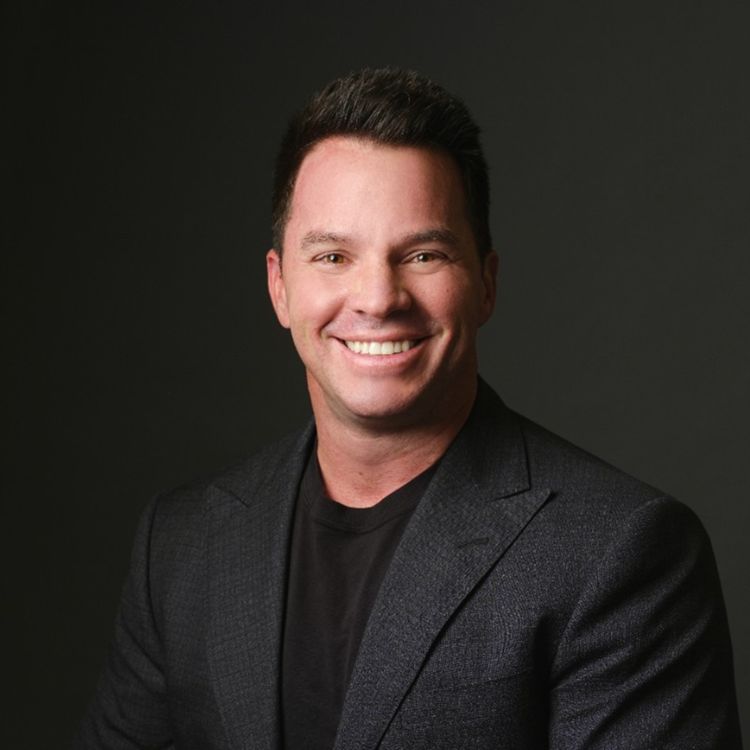
Wade Millward is the founder and CEO of Rikor, a technology-enabled insurance and risk management company focused on the franchising industry. He has spent his career working with franchisors, franchisees, and private-equity-backed platforms to uncover hidden risk, design scalable compliance systems, and align insurance strategy with how franchise systems actually operate. Wade writes from direct experience building systems, navigating claims, and helping brands scale without losing visibility into risk.
Website: protectmyfranchise.com
LinkedIn: https://www.linkedin.com/in/whmillward/