

The corporate balance sheet of a franchise system is only as resilient as its weakest unit. For years, franchisors have treated insurance requirements in Item 8 of the FDD as a clerical checkbox: a defensive wall of paperwork intended to satisfy legal departments and mirror what the competitor down the street is doing. This is a systemic failure of risk architecture. When you mandate a $250,000 Employment Practices Liability Insurance (EPLI) limit for a childcare or tutoring center, you aren’t providing a safety net: you are handing your franchisee a coin flip. The median cost to resolve an EPLI claim now sits at $258,500, meaning half of all claims will instantly bankrupt the very policy you required to protect the brand.
This gap between mandated minimums and actuarial reality is where the franchise system begins to cannibalize itself. We see it in the form of “Operational Drift,” where the pressure of growth causes franchisees to bypass the very compliance protocols that keep the system solvent. A tutoring center owner, desperate for staffing, might skip a formal background check or rush a termination of an hourly worker without documenting the progressive discipline. Or, an early childhood educator might decide to offer “light” summer camp activities that technically fall under different state licensing and employment classifications, creating unrated exposures that their baseline policy was never designed to trigger. When these shortcuts meet a 44% surge in EEOC charge filings, the “paperwork shortcut” stops being a minor oversight and becomes a direct threat to the franchisor’s brand equity and joint-employer defense.
The following analysis is not about marketing a product. It is about the second-order consequences of growth in a sector where the workforce is predominantly female, hourly, and subject to mandated reporter laws that create a hair-trigger environment for retaliation claims. If your insurance schedule was written more than three years ago, you are likely operating a system that is fundamentally underinsured for the current legal climate.
Key Takeaways
- The Median Claim Now Exceeds the Standard Requirement. Most child education FDDs still call for a $250,000 EPLI limit, yet the median claim cost has climbed to $258,500. This is not a margin of safety: it is a guaranteed shortfall for half of the claimants in the system.
- Scale Provides No Sanctuary for the Small Operator. Contrary to the “small business” myth, companies with 15 to 100 employees are 32% more likely to face an employment claim than their larger counterparts. In the child education space, small payroll does not equal small risk.
- Statutory Caps are Irrelevant in High-Density States. While federal law may cap certain damages, states like California and New York offer no such ceiling. For franchisees in these hubs, a single discriminatory act can lead to unlimited financial exposure.
- Compliance Paperwork is Not Risk Transfer. Requiring a franchisee to have a policy is “paperwork compliance.” Ensuring that policy includes wage and hour defense and third-party coverage for parent-facing interactions is “true risk transfer.”
Why Does the “Industry Standard” Fail to Protect the Modern Franchise System?
The $250,000 limit found in the average tutoring or enrichment FDD is a relic of a different era. In 2024, the EEOC recovered a record $700 million for workers, a figure that reflects a more aggressive and well-funded regulatory environment. When you factor in that defense costs for a claim that eventually gets dismissed still range between $50,000 and $120,000, it becomes clear that a quarter-million-dollar policy is exhausted before a settlement is even discussed. For a franchisor, this creates a vacuum. When a franchisee’s limits are spent, the plaintiff’s attorney naturally pivots to the only other entity in the room with a deep pocket: the corporate headquarters.
This isn’t just about the money paid to a plaintiff. It is about the systemic impact on unit-level economics. A single-location operator with 15 employees might be lean on revenue but is high on exposure. Two concurrent claims—perhaps a pregnancy discrimination suit and a wrongful termination filing—will vaporize a $250,000 policy in months. At that point, the franchisee is paying out of pocket for legal fees, diverting capital away from operations, marketing, and royalty payments. The health of the brand is inextricably linked to the adequacy of the unit-level insurance limits.
Why Do Franchisees and Corporate Teams Resist Higher Limits?
Despite the data, three common arguments consistently stall the update of insurance schedules:
- The “Low Headcount” Fallacy: Many franchisees believe that because they only have a dozen part-time instructors, their risk is negligible. However, 75% of all EPLI claims target businesses with 50 or fewer employees. Small businesses lack the HR infrastructure to prevent the “managerial errors” that lead to lawsuits.
- Cost Sensitivity: Corporate teams often fear that raising insurance requirements will make the franchise “less attractive” to prospects. In reality, the difference in premium between a $250,000 limit and a $500,000 limit is often negligible compared to the cost of an unfunded claim.
- The Federal Cap Misconception: Operators often rely on Title VII federal caps, which limit damages to $50,000 for small employers. They fail to realize that state-level agencies, such as the California Civil Rights Department or the New York City Human Rights Law, often have no caps and lower employee thresholds for jurisdiction.
How Can a Multi-Unit Network Deploy a Resilient Coverage Strategy?
Rolling out a solution across a network of 50 or 500 locations requires a move away from “one size fits all” mandates. A practical playbook for a franchisor involves:
- Geographic Calibration: Require higher limits for franchisees in “Plaintiff-Friendly” states (CA, NY, NJ, IL, FL).
- Explicit Endorsements: Move beyond a generic EPLI requirement. Mandate a “Third-Party Coverage” endorsement to address claims from parents or volunteers, and a “Wage and Hour Defense” sublimit of at least $100,000 to cover the 80% of claims that involve pay disputes.
- Vetting the Carrier: Ensure franchisees are not buying “B-rated” paper just to satisfy the FDD. The carrier must have the expertise to handle the nuances of mandated reporter retaliation claims.
What Are the Bottom-Line Advantages of Better Risk Transfer?
For the franchisor, the upside is brand protection and a cleaner legal profile. By ensuring franchisees are properly covered, you reduce the likelihood of being pulled into a “joint employer” lawsuit because the franchisee could not afford their own defense. For the individual owner, higher limits provide the “peace of mind” that allows them to focus on instruction and enrollment rather than litigation. Properly structured insurance is a retention tool. It ensures that a single bad hiring decision does not end a franchisee’s career and stop the royalty stream to corporate.
Is Your System Ready for the Next Claim Cycle?
Use this framework to evaluate your current system readiness:
- Date Check: Was your insurance schedule written before 2022? (If yes, it is likely obsolete).
- State Check: Do more than 20% of your units operate in states without damage caps?
- Endorsement Check: Does your mandated EPLI explicitly cover “Third-Party” (parent) harassment and “Wage and Hour” defense?
- Joint-Employer Check: Are you listed as an “Additional Insured” on the franchisee’s EPLI? (If yes, you are likely increasing your legal liability rather than reducing it).
Evidence and Causality: The Hard Numbers
The surge in liability is not a theory. The NCCI and DOL data points show a clear trajectory. Retaliation has been the top EEOC charge category for 17 years, accounting for 47.8% of all charges in fiscal year 2024. In the childcare sector, the “Mandated Reporter” law creates a unique retaliation trap. Every employee is legally required to report suspected abuse. If that employee is terminated for any reason shortly after a report, the probability of a successful retaliation suit is nearly 60%.
Furthermore, the Pregnant Workers Fairness Act (PWFA) saw over 2,700 charges in its first year. Because the child education workforce is overwhelmingly female and often hourly, the exposure to accommodation and pregnancy-related claims is structurally higher than in a service-sector business like a car wash or a gym.
FAQ
Is a $250,000 EPLI limit ever acceptable? It is rarely sufficient. A $250,000 limit is a paperwork exercise that might satisfy a bank, but it fails to provide actual risk transfer in an era where defense costs alone can reach $120,000 for a dismissed claim.
Should the franchisor be an “Additional Insured” on the franchisee’s EPLI? No. Naming the franchisor as an additional insured on an EPLI policy provides a paper trail for plaintiffs to argue joint-employer status. The correct move is a “Co-Defendant Endorsement,” which provides shared defense without the baggage of insured status.
Does a soft insurance market mean I should lower my requirements? On the contrary. The soft market is an opportunity to lock in higher limits and broader terms at historically low rates before the inevitable price correction follows the recent surge in EEOC filings.
How does “Wage and Hour” coverage work in these policies? Most standard EPLI policies exclude wage and hour claims entirely. You must require a defense-cost endorsement, usually capped at $100,000 or $250,000, to ensure there is money to pay attorneys when an hourly pay dispute arises.
Why is third-party coverage so important for childcare? Standard EPLI covers employee-on-employee actions. In a childcare setting, a parent may allege discrimination or harassment. Without a third-party endorsement, that claim has no policy to respond to it.
Conclusion
The insurance minimums found in child education franchise agreements were largely built on convention rather than data. They represent a legacy of what was “reasonable” a decade ago, ignoring the fact that the legal and regulatory environment has shifted beneath the industry’s feet. With EEOC charges at record highs and the removal of damage caps in key states, the “industry standard” is no longer a shield. It is a vulnerability. Protecting a franchise system requires moving past paperwork compliance and toward a strategy of genuine risk transfer that recognizes the unique, high-stakes reality of child education.
About the Author
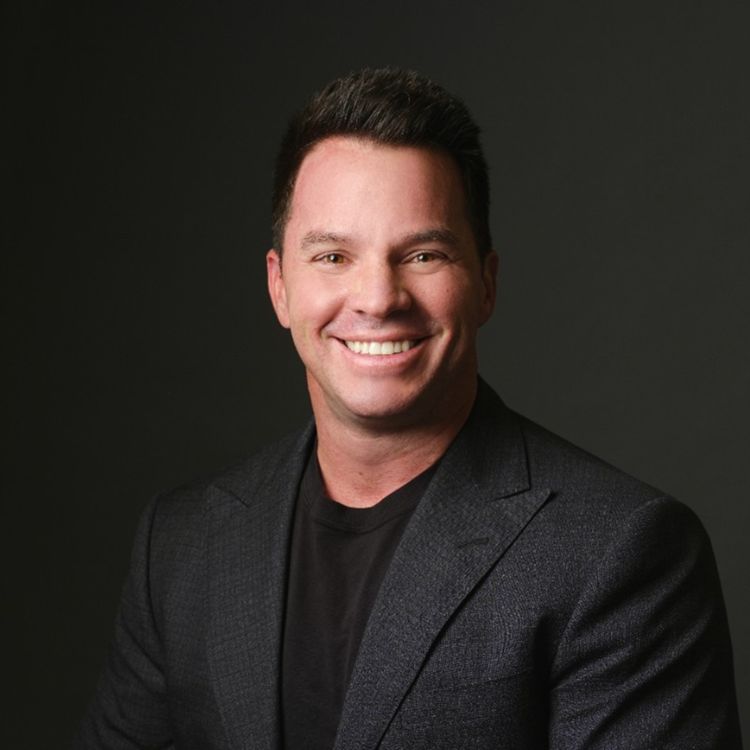
Wade Millward is the founder and CEO of Rikor, a technology-enabled insurance and risk management company focused on the franchising industry. He has spent his career working with franchisors, franchisees, and private-equity-backed platforms to uncover hidden risk, design scalable compliance systems, and align insurance strategy with how franchise systems actually operate. Wade writes from direct experience building systems, navigating claims, and helping brands scale without losing visibility into risk.
Website: protectmyfranchise.com
LinkedIn: https://www.linkedin.com/in/whmillward/