
Franchise Exit Planning Starts Long Before a Franchisee Decides to Sell
For years, franchising has measured success by growth. More franchisees, more units, more royalties, more development. Those metrics matter, and they always will, but after spending decades working alongside franchisors, I’ve come to believe they’re only part of the story. The more interesting question isn’t how many franchisees we’re adding to the system—it’s what we’re actually helping those franchisees build.
That was the conversation we set out to have during The Enviable Exit, a recent webinar I had the privilege of hosting with Barbara Nuss, CPA, Founder of Profit Soup, and Paul Pickett, Chief Development Officer and EVP of Franchising at Wild Birds Unlimited. While the title focused on exit planning, the discussion quickly became something much bigger. It wasn’t about selling businesses. It was about building businesses that are worth owning, worth growing, and eventually, worth transferring.
One of the first audience polls revealed something that didn’t surprise me, but certainly reinforced what I’ve seen throughout the franchise industry. While many franchisors are beginning to introduce the idea of exit planning during onboarding or within the first year of ownership, a significant number still wait until a franchisee starts talking about retirement or selling their business. On the surface that seems logical. After all, why discuss an exit with someone who’s just getting started? The problem is that enterprise value isn’t created when someone decides to sell. It’s created through years of decisions that shape the business long before that conversation ever takes place.
Barbara captured this idea perfectly when she talked about the importance of connecting the business to the owner’s personal goals. Every franchisee enters the system for a reason. Some want financial freedom. Others want flexibility, wealth creation, or the opportunity to leave something meaningful for their family. Whatever that vision is, it becomes the runway for every decision they make. When owners lose sight of that vision, they often become consumed by the day-to-day demands of running the business. They focus on today’s sales, today’s staffing challenges, and today’s profitability instead of building an enterprise that supports the life they ultimately want to live.
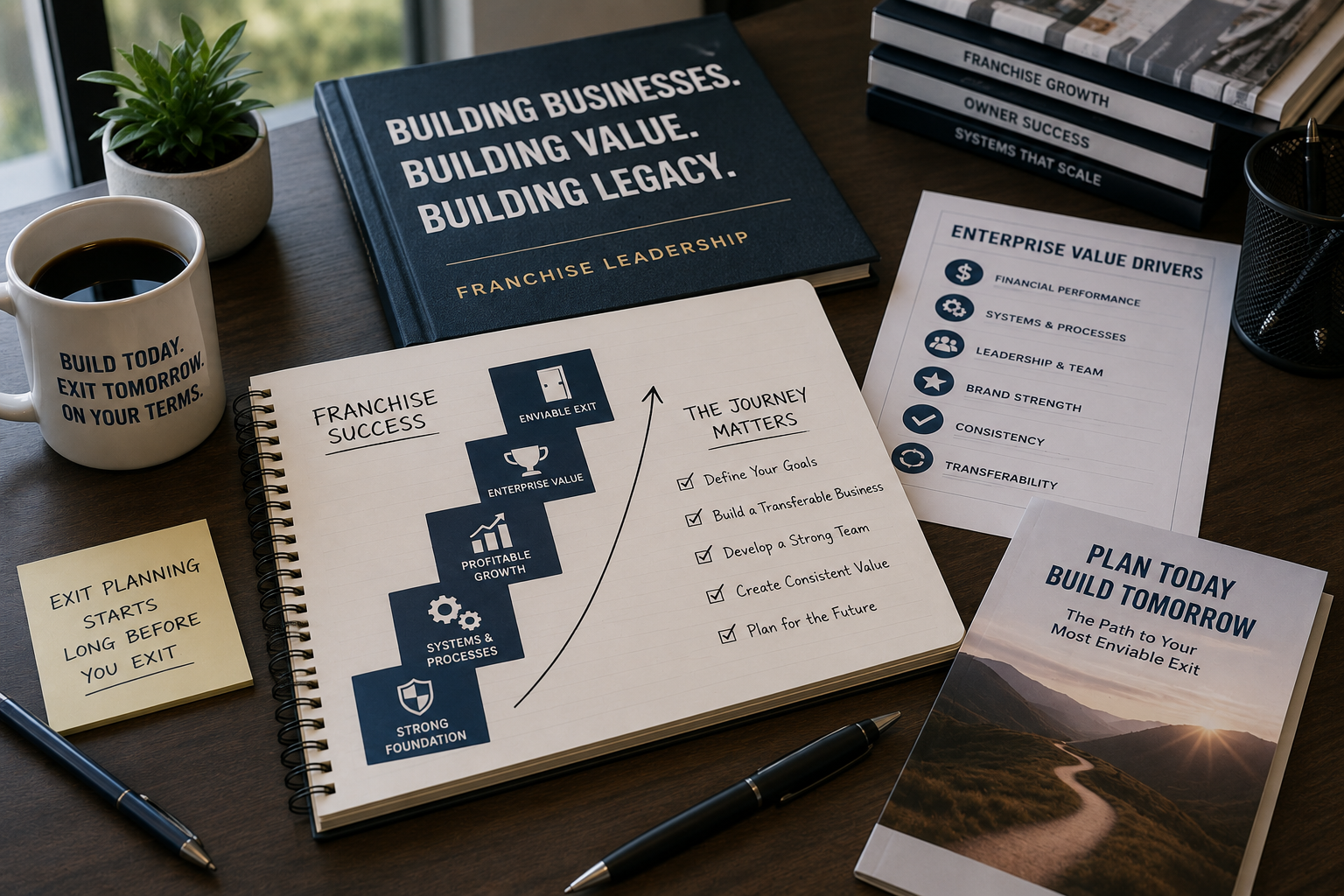
That conversation naturally led to one of the most important ideas of the webinar: the difference between building a business and building enterprise value. Those two things aren’t always the same. A business can generate income, yet still have very little transferable value. Enterprise value is created through systems, leadership, profitability, consistency, and the ability for the business to thrive without depending entirely on the owner. Those aren’t decisions that happen in the final year before retirement. They’re decisions that begin on day one.
Paul Pickett shared how Wild Birds Unlimited approaches this mindset with prospective franchisees, and I found his perspective incredibly refreshing. Rather than treating retirement as an uncomfortable topic reserved for years down the road, they introduce the idea of building an enterprise from the very beginning. During Discovery Day and throughout the ownership journey, franchisees are encouraged to think beyond simply owning a store. They’re encouraged to build an asset. That subtle shift in language changes everything because it moves people from the mindset of an operator to the mindset of an investor.
I believe that’s one of the greatest opportunities franchisors have today. Too often, our conversations revolve around helping franchisees open successfully, ramp up sales, or improve operational performance. Those are all important objectives, but they shouldn’t be the finish line. If our role is truly to help franchisees succeed, then we also have a responsibility to help them build businesses that provide options in the future. Whether they choose to own that business for ten years or thirty, the goal should be the same: create something that has lasting value.
That’s why I don’t really think of this as an exit planning conversation at all.
I think of it as a leadership conversation.
It’s about helping franchisees make better decisions because they understand where they’re ultimately headed. It’s about creating stronger businesses because owners have a clearer vision of what they’re trying to build. And it’s about recognizing that the greatest franchise systems don’t simply help people buy businesses—they help people create wealth, build legacy, and achieve the personal goals that inspired them to become business owners in the first place.
The most enviable exits don’t begin when someone decides to retire.
They begin the day they decide to build something worth leaving behind.